

Mudding Out and Pitching In
Hurricane Katrina and a Busload of Hoosiers

Welcome back to The Real Rachel BS, the newsletter about peculiar things in life, created and produced by me with the help of my much better half, Mat. If you’re a lover of random and not so random things, stick around. If you’ve only just met me, subscribe to this newsletter to keep it coming.
Even though it’s been well over twenty years, I still remember the images of the devastation on TV as the levees broke and Hurricane Katrina arrived on shore. Throughout Louisiana, Mississippi and Alabama entire cities were displaced with billions of dollars in damage to homes and infrastructure and almost two thousand deaths. It was indescribable chaos and loss and served as a lesson on how much more we still had to learn about preparing for disasters individually, locally and nationwide.
In spite of being clueless at the time about how any singular person could make a meaningful difference, I still felt a sense of urgency to do something. It wasn’t the first time I felt that way, as I explained in my essay Extreme Altruism and Psychopaths. It’s a feeling I continue to harbor even today when I see entire neighborhoods or cities bulldozed by the weather. When I am asked to deploy to this state or respond to that weather event, the matter at hand feels unattainable yet my sentiment remains the same. The time to act is now.
Back then citizen responders like those in Community Emergency Response Teams (CERT), Disaster Cycle Services volunteers with the American Red Cross or agency staff mobilized through FEMA were not on my radar as a means to be helpful like they and many other organizations are now. After decades of catastrophic weather events playing out on the news, I know a lot more now about who is doing what in relief, response and recovery. Twenty years ago, in small town Indiana, our own brand of volunteerism emerged to support the people impacted by Hurricane Katrina: the local church. Listed in our city paper, a church from nearby Angola was planning a trip to Louisiana and they invited the public at large to come along and pitch in with clean up. They partnered with another church in New Orleans who agreed to feed and house anyone who came to work. All that was needed were the people.
I felt the angst of helplessness frequently enough to consider this request. To help people recover from a Hurricane, what did that even look like? At the time I didn’t go to any church but believed in coexistence (shouldn’t we all?). Several of my family members were religious yet I wasn’t religious at all. Given I hadn’t yet caught fire in their presence or while walking into any churches, a dozen hour road trip to Louisiana with a busload of church people would surely be the ultimate test of my flammability. I was confident I could get along well with anyone committed to helping in a crisis, no matter anyone’s belief system.
My father had never volunteered like this either so I asked him to join me. Neither those hard leather seats in the big bouncy school bus, the distress of sleeping in an unknown location, nor the mystery of what we would eat deterred Dad from saying yes. Perhaps he, too, was feeling helpless. I was working part time at a Liberty Tax office at the time and the owner, Holly, was a huge supporter of her staff. She offered to sponsor my trip and paid the $85 cost of my “room and board”. Dad’s church sponsored him to participate as well. We were in!
We packed the grungiest work clothes and shoes we had for the task of “Mudding Out” and arrived at the rendezvous point for pick ups to join the Fairview Missionary Church road trip. Droves of young people and some of their parents loaded onto the bus with us to serve their faraway neighbors on behalf of their faith. With snacks and goodwill in hand, a busload of Hoosiers set off to do what Hoosiers do best, to tend to their neighbors. Some of them had been on this sort of expedition before and some were experiencing it for the first time, just like me and Dad.
Our efforts were concentrated primarily in the St. Bernard Parish and 9th Ward neighborhoods of New Orleans, which had been hit hard. Once the water receded, impacted residents whose homes were flooded needed the entirety of its moldy contaminated contents removed in order to begin their recovery and rebuild. Unable to tackle this huge job on their own, addresses were added to the running list of homes in need of volunteers just like us.
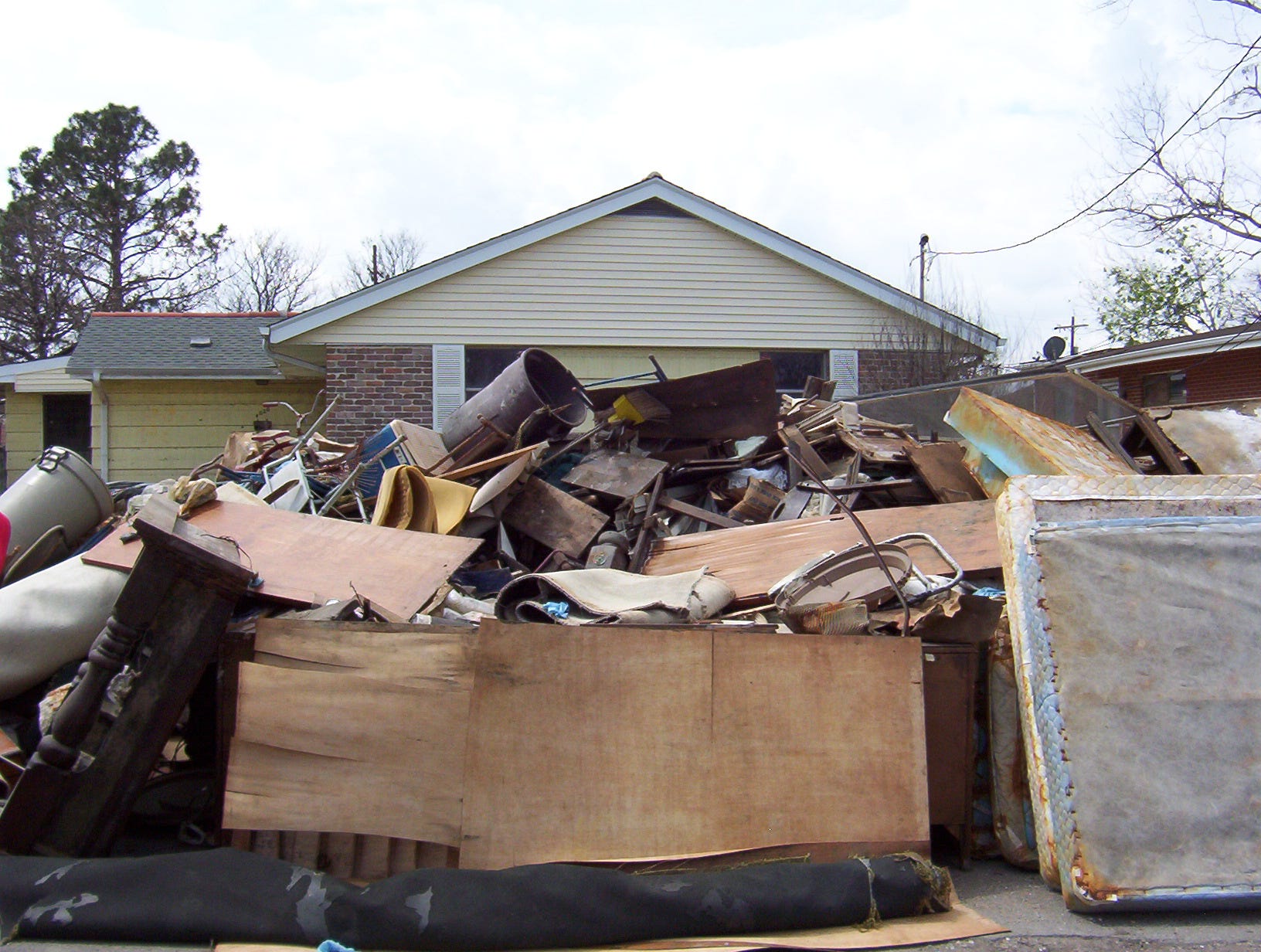
Equipped with wheelbarrows, power tools and dollies, each house was a unique experience in “Mudding Out” as we were uncertain what was lurking inside of each long-vacated home. Broken into groups, some of us would focus on hauling everything out of the bedrooms and onto the curb, others grabbed anything toxic or potentially dangerous for its own pile in the yard. Still others were in charge of the heavy lifting of couches, dressers and the like. But the most gruesome of all the tasks was reserved for the lone septuagenarian in our group, at his request. Emptying out the refrigerators, which had been sitting inoperable for months, was not for the faint of heart or anyone with a functional sense of smell.
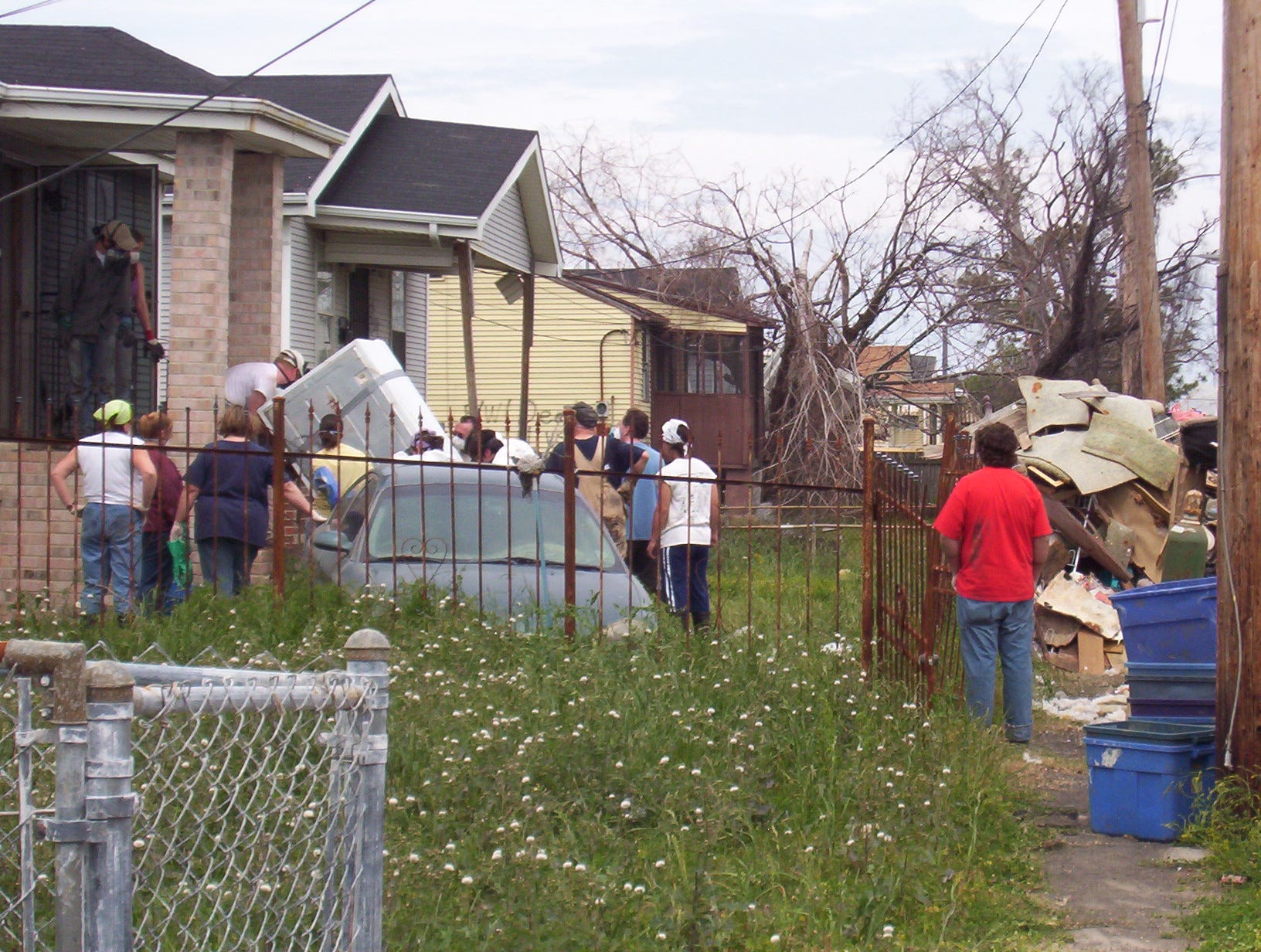
When I asked Dad what he recalled about our trip I was surprised at the memories he had stowed away compared to mine. Even though we were on the same team working at the same houses, he remembered accidents and hazards that I didn’t. Chainsaw work to clear the areas around the homes led to select volunteers being injured because they came with ambition but lacked skills in operating power tools. Even though the water had receded by the time we arrived, it still posed a threat to those who came in contact with it. As Dad pulled the kitchen contents out of cabinets, some shelves being 7 and 8 feet high, water-filled mixing bowls provided him an unexpected dousing in toxic waste. The days were long and the work was messy, Dad remembered.
I did manual labor for more than a decade in my factory leading up to this trip to Louisiana. The kind of work that makes your muscles ache the next day if you aren’t built for it. As Leo Gerard, President of the United Steelworkers, used to explain, “we’re the kind of people who take a shower when we get home from work, not before we go to work.” Workhorses dominated my gene pool of relatives who sweat for a living. My bloodline prioritized braun over any other type of contribution because we are good at it. Mudding Out houses was just another rendition of that.
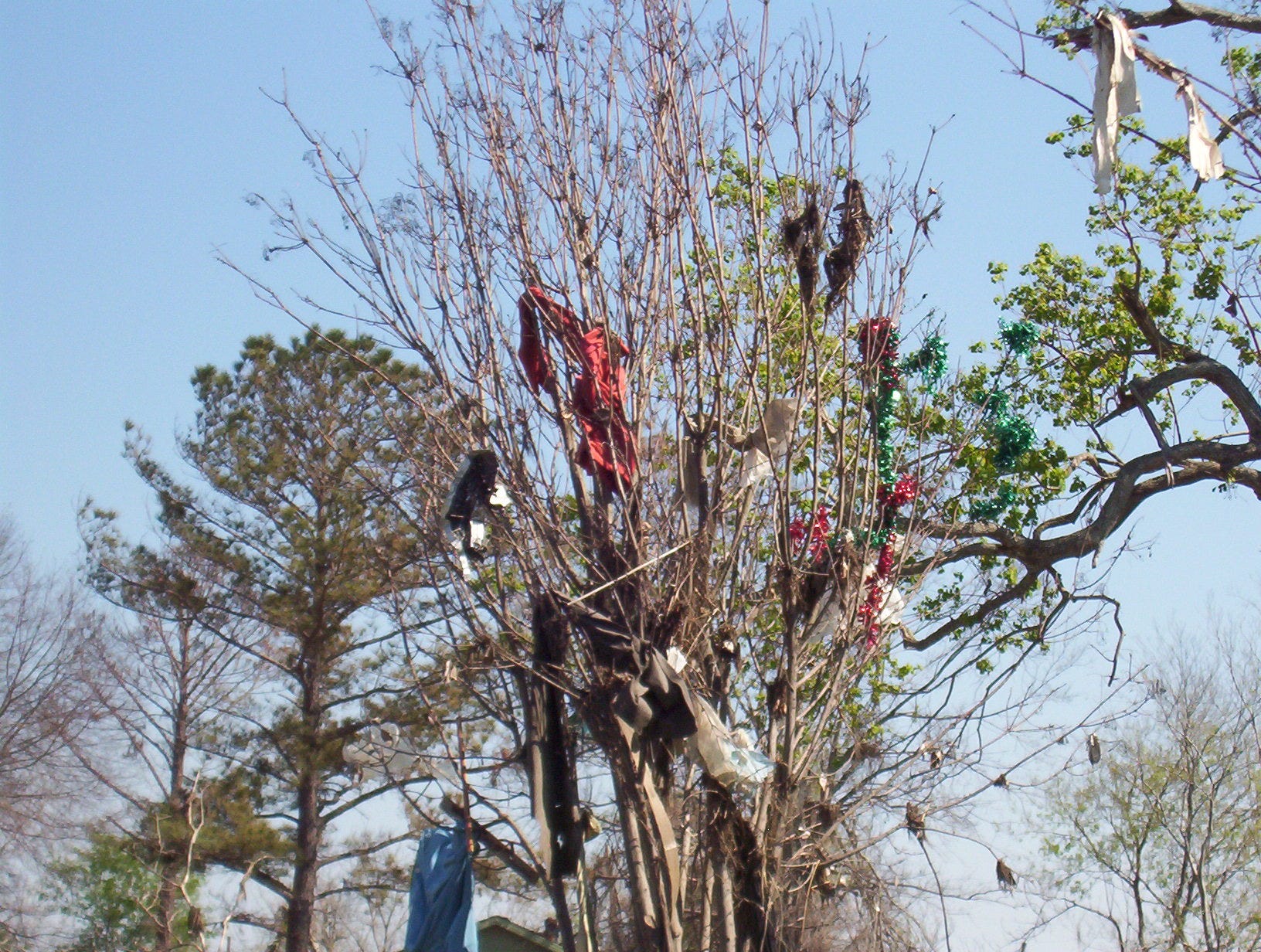
Family photos turned to mold on the living room walls. Clothes from one neighbor found their way into the trees of neighbors blocks away. The cryptic spray painted messages on the front of the houses from the search and rescue teams told us how many residents were lost on each street, once we knew how to decipher the code. Each evening we returned tired and late to our temporary sleeping quarters coated in muck carrying glimpses of other people’s lives in our minds. By then, the one shower available at the church only had cold water. The repetition of eating 4 Chef Boyardee ravioli and a scoop of green beans every night for dinner left little room for surprise. We slept in sleeping bags on the floor between the pews in the church sanctuary. Conditions were indeed rugged. Still, we were the lucky ones.
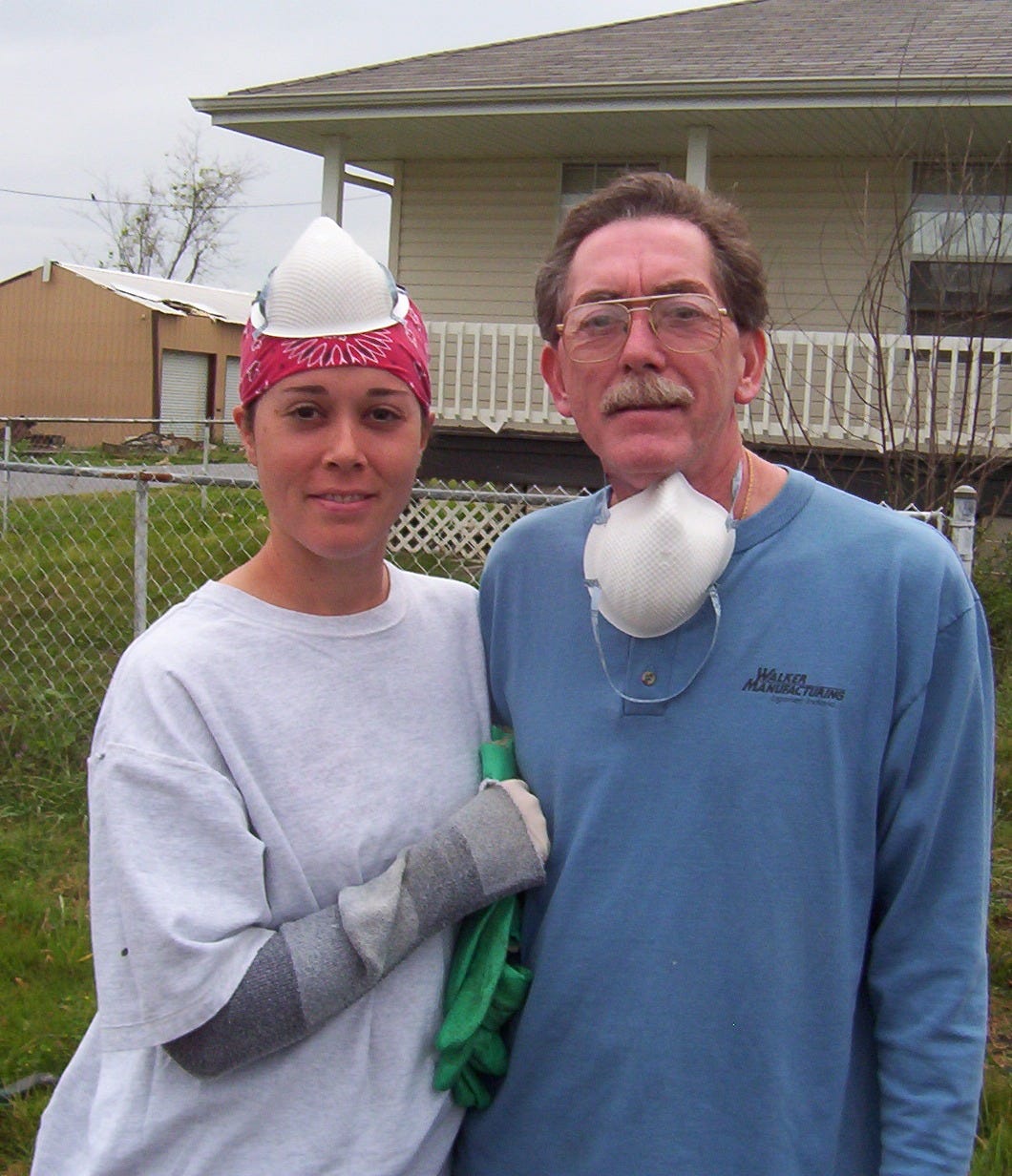
Aside from each other, Dad and I knew no one on that trip but they welcomed us in to join them in the work. An Indiana church with goodwill to lend, a Louisiana church with room to offer and a hefty dose of elbow grease made the weight of the situation a little lighter for several families impacted by Hurricane Katrina. That cross country - interfaith collaboration made it possible for Dad and me to have our first experience in recovery volunteerism together, more than twenty years ago, and likely kickstarted my interest in helping communities during times of crisis as I do today.
Can one person really make a meaningful difference? If Zinn thinks so, count me in!
“Small acts, when multiplied by millions of people, can transform the world.” ― Howard Zinn
Our Atlantic Hurricane season runs from June 1 through November, with the Pacific season beginning May 15th and ending the same time. That timeline has been a predictable measure to plan around in past years yet it seems to be more of a suggestion nowadays. Climate change, or whatever the cool kids are referring to as the “warming of the planet beyond repair” can be full of surprises. Best to stay on our toes in every month.
For tips on how to stay safe before, during and after a hurricane, you can visit resource pages for National Oceanic and Atmospheric Administration (NOAA), the Federal Emergency Management Agency’s READY Campaign (FEMA) and the American Red Cross (ARC). For a directory of organizations you may be interested in volunteering or working with, visit the National Voluntary Organizations Active in Disaster (VOAD) member database.
About the Author:
The Real Rachel BS is a perpetual wanderer specializing in communications for non-profits and supports disaster response efforts nationwide. She is a former trade unionist with the United Steelworkers and a member of SOAR, the Steelworkers Organization of Active Retirees. She belongs to the Unitarian Universalist Church of Studio City and is a member of the Authors Guild, the Association of Writers & Writing Programs, the International Women’s Writing Guild and the Italian American Writers Association. Learn more about Rachel’s work including her memoir Losing My Kidney and Finding My Voice: Confessions of a Living Donor at bennettsteury.com
Was able to get some free time recently, finished my book club book and I am about a 1/3 through yours. You're an unbelievable person. I know you said you didn't want to be a mother, but you would be an amazing one.
dick
wonderful article. You are an amazing person