

A Double Kona Low
Friday the 13th and the Compassion of Strangers

Welcome back to The Real Rachel BS, the newsletter about peculiar things in life, created and produced by me with the help of my much better half, Mat. If you’re a lover of random and not so random things, stick around. If you’ve only just met me, subscribe to this newsletter to keep it coming!
You may have already “heard” it through the weathervane, but we have had some wild weather out here in the pacific lately. Meteorologists on every channel warned us that a Kona Low was headed our way well in advance of it all. Text notices came in from each county. Alerts on the American Red Cross Emergency app made it clear there was weather coming. Everyone was on the same page: take precautions, don’t wait to make a plan.
Typically, storm patterns tend to hail from the northeast. Wind and rain come from that direction and impact the topography time and time again. Trees, drainage routes and mountainsides are all used to adapting to the impending weather. Roots dig into the soil expecting a northeast impact. But a Kona Low storm flips the script with the wind and rain coming from the west or southwest instead. Downed trees are common in this type of storm because they’ve been accustomed to “holding on” for an impact from the northeast, not the southwest.
Rain in a Kona Low can sit for days in one place because the wind pattern is not driving it through as quickly as a typical storm. Cold air at its core collides with warm moisture from the water and the two intensify the outcome. Luckily, a Kona Low occurs just a few times a year. Sometimes the major stuff misses the islands entirely. Still other times, it sets its GPS to arrive right at our doorstep.
Mat and I began all of our usual precautionary moves to prepare. We charged all of the electronics. We filled all of our empty orange juice jugs with water and tossed them in the freezer and fridge. We brought in anything that could take flight from the lanai. I was on standby with the Red Cross in the event an evacuation shelter was needed. My supply bag was packed, complete with my instant coffee and oatmeal packets to get me through any storm. I still didn’t have rainboots in my inventory but had a $5 pair of old sneakers I bought at Trinity Thrift at the ready if I ever needed to drudge through some stuff.
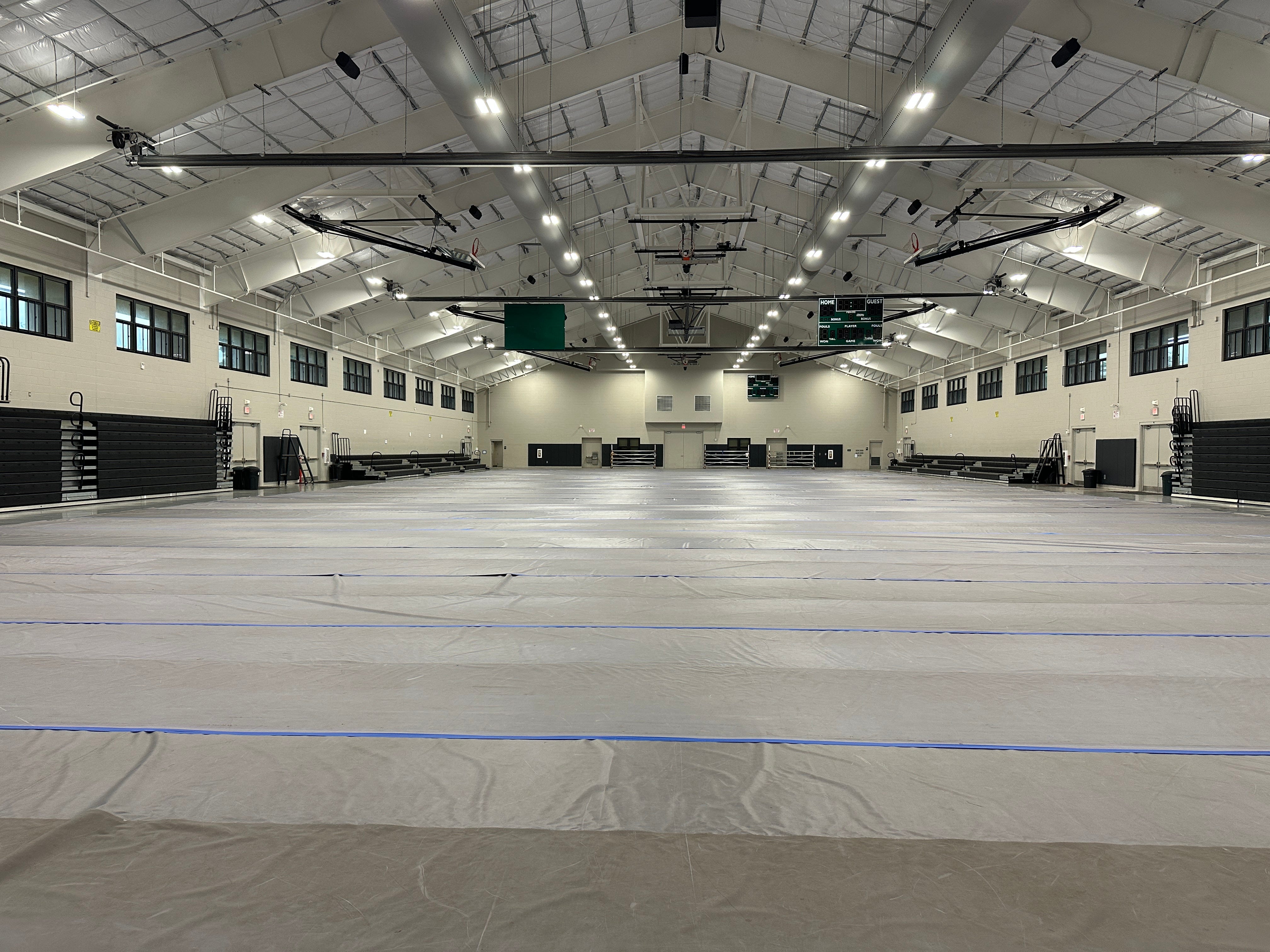
Since the Kona low was coming from the west, reports from the ground on Kaua’i and Oahu were enough for those of us on Maui and Hawai’i island to proceed with caution. I met county staff at the gate in front of the building to get one of our 18 Red Cross shelters up and running ahead of the water and the people. Walking into the vastness of the empty community gym transported me back in time. It was the first time I had been back inside of the building since the wildfires devastated the island in August of 2023. I was focused on the task at hand, but reuniting with that memory was a reminder of just how essential and adaptable our public spaces can be in times of crisis.
In 2023,
as a Hawai’i Island Red Cross volunteer at the time, I flew into Kahului, a quick forty minute flight away. It was my very first time on Maui, so I didn’t know where I was going and my sense of direction was way off. Due to the severity of the wildfires in Lahaina and upcountry Maui, with thousands of homes destroyed and hundreds of people missing, injured or killed in the deadliest natural disaster the state of Hawai’i had ever faced, helpers came in from near and far to assist.
A majority of volunteers assigned to the mission would be sleeping en masse at various open spaces to include churchhouse floors and county managed basketball courts. That afternoon I walked into the community gym amidst a flurry of activity as dozens of other volunteers were getting settled in to begin their assignments. Strategies were being planned. Bags were being unpacked. Clothes, towels and those white scratchy Red Cross blankets were strewn everywhere. Tables of snacks and pots of coffee were at the ready near the door as collaboration and goodwill continued to flow throughout the building.
Looking into the distance, the sleeping quarters seemed endless. Perfectly measured and positioned, each bed was about 3 feet apart from the bed on its left, the bed on its right, the bed behind it and the bed ahead of it. Each bed had a blanket on top and a blue strip of painters tape marked with a number to assign each one to its intended volunteer. If anyone knows how to organize a shelter for staff, it’s the very same volunteers who regularly work the shelters for impacted communities, the team in Mass Care. Along with 134 other volunteers, that gym was my home during my time helping in Logistics to support the Maui community in 2023.
In preparation for the Kona Low,
we unpacked supplies, arranged a registration table and pulled cots out of boxes and onto the desolate basketball courts. Slowly, the shelter began to take shape. The stillness of that giant empty gym came alive with just a few volunteers and a myriad of supplies. Even if the neighborhood didn’t need to evacuate, we were equipped with the essentials but most importantly, a place to charge phones and stay dry. That is the essence of an evacuation shelter. It’s not the Ritz, but it is a safe and dry place to wait for brighter days.
It didn’t take long for the Kona Low to drop buckets of rain. Then, it just didn’t stop. On the second day of the storm, it was nearly 8p.m. when I left the shelter to drive home a few miles down slope. I had been stowed away in the confines of the gym since dawn earlier that day. I crossed my fingers and hoped for the best. If I couldn’t see through the rain to make it home, at least I knew I could return to the shelter to sleep.
I was nearly home free when I felt the swoosh. It was hard for me to tell how high the water was in the dark with rain dousing the windshield until I was actually driving in it. Maybe just the corner is deep? Maybe the other side of the road is shallower? “Turn around don’t drown” was on repeat in my brain, and that’s exactly what I did. A restaurant parking lot was on higher ground in the distance so I headed that way.
The sound of the “thunk” made my heart sink. I slowly backed up to see what looked like a piece of a bumper right in front of me. If it were my car part or someone else’s, I wasn’t sure. I got out and tossed it in the trunk and kept driving toward the restaurant. With my headlamp facing straight away and Mat’s bright orange raincoat doing its best to keep half of me dry, I grabbed my things out of the car and started out on foot four blocks home. I walked in the middle of the road so I couldn’t be missed, but in that weather, I was the only one out there to be seen.
The scene was like something out of a movie, the sewer cap was bubbling up in the middle of the intersection. Debris and what looked like car parts were floating by me as I walked past. I was kicking myself that I chose to wear my favorite tennis shoes to the shelter that day instead of the $5 cheapies I bought for this exact occasion. With water nearly to my knees, there was nothing I could do about it now.
By the time I got home Mat had a towel laid out at the door and I just dropped everything, drenched, and headed for the shower to wash off whatever toxins were lurking in the water that night. In spite of being 30 feet from the ocean and our road being a reimagined water park, our place, thankfully, remained dry. It was midnight when we lost power with neither of us the wiser until the morning. That’s when we found a swimming pool had been installed in our other car parked just across the street.
Sometimes, Friday the 13th gives us exactly what we expect it to.
To hear a second, less hostile Kona Low was on its way was of no relief. By that next week the entire state was essentially a sponge already saturated and pouring out at the seams. Sure we were going to get less rain and wind but the glass was already full, brah! Even if we had less water coming, we were still getting more than we had the capacity to handle.
By the end of the second week and the end of the second Kona Low storm, Oahu’s north shore was nearly unrecognizable. Homes nearby dainty streams were forced from their bases by newly raging rivers in Iao Valley. Downed trees along the road to Hana made it impassable. Moloka’i had sinkholes and water damage beyond belief. Roofs ripped off restaurants along the west shore of Hawai’i island. Of all the islands, Kaua’i sustained the least damage.
An entire shipping container floated down the nearby street like it was a surfboard. Thousands were without power and still more had boil water advisories. As of now, no one has died as a result of the Kona Lows but Songcha Wormley, a 71 year old woman from Maui, fell into the Wailuku River and remains to be found. According to the University of Hawaii at Manoa, the state received 2 trillion gallons of rain during the month of March. On Maui alone 62 inches of rain fell. Hawai’i island had 135 mph wind gusts. Hurricane weather without the hurricane, according to Maui Now.
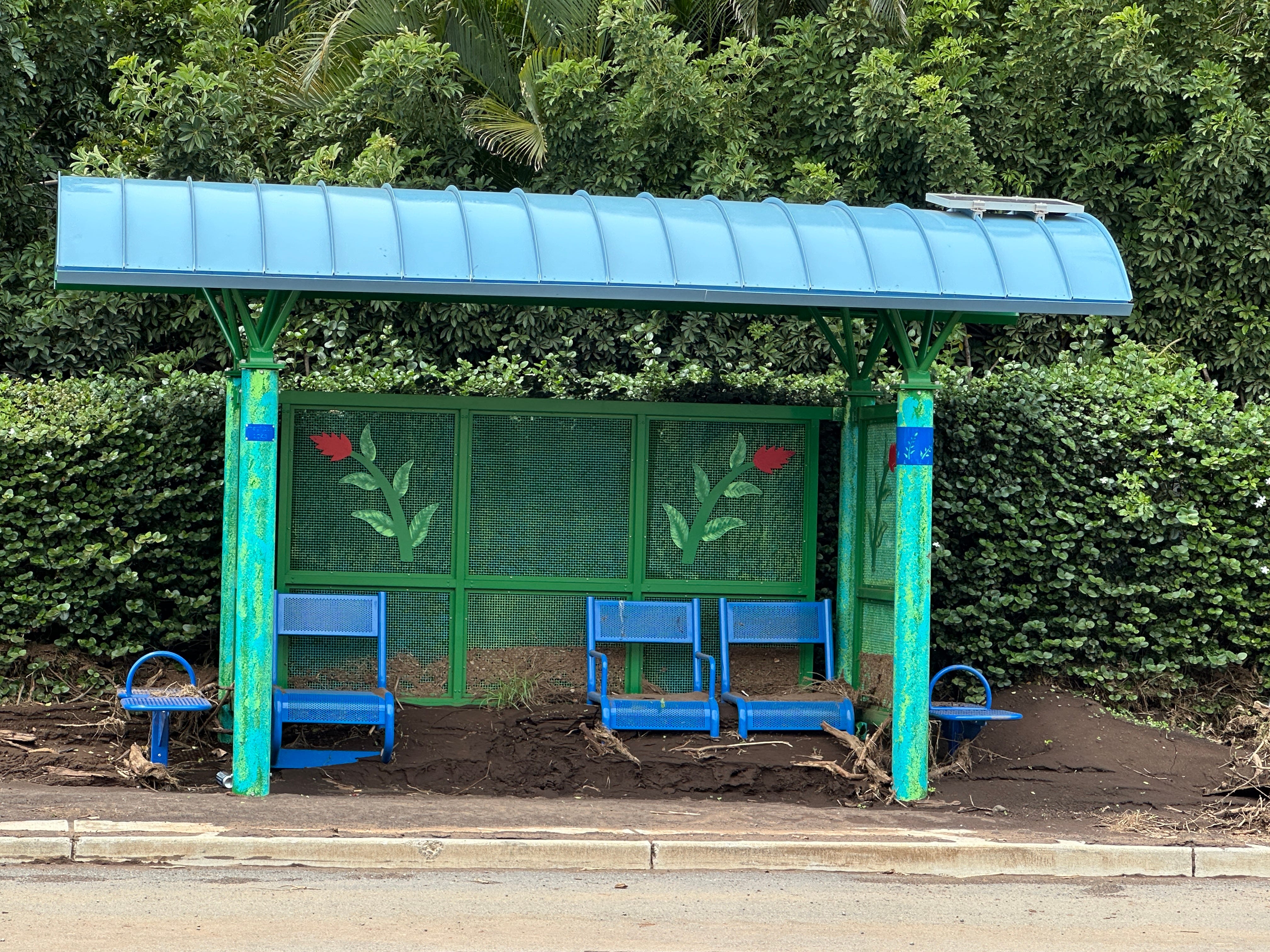
To have a double Kona Low hit was hard enough for the people of all of Hawai’i’s islands. With many on Maui still recovering from the wildfires of 2023 it just compounded that grief, as is the case for Sue Brimeyer and her grandson Kapono.
Many cars and homes sustained damages in the double Kona Low. Our cars, while a major inconvenience, pale in comparison to the situation many in Hawai’i now face as they work to rebuild, clean up or dig out. All hands are on deck once again to support one another.
For me, what always stands out in times like these are the helpers that Mister Rogers reminded us of. Neighbors looking out for each other. Community and nonprofit groups mobilizing to care for the displaced. Food and water drops. Donations of clean, dry clothes. We all take a turn. The ohana, who is sometimes a perfect stranger and sometimes the Aunty next door, is the first on the scene and the last to leave in all emergencies, including a double Kona Low that introduced itself to Mat and me loud and clear on Friday the 13th.
As recovery is underway, residents who need assistance are encouraged to call Aloha United Way at 211 or register at ready.hawaii.gov. To connect to supportive services available with the Red Cross, call 1- 800-RED CROSS (800-733-2767).
About the Author:
The Real Rachel BS is a perpetual wanderer specializing in communications for non-profits and supports disaster response efforts nationwide. She is a former trade unionist with the United Steelworkers and a member of SOAR, the Steelworkers Organization of Active Retirees. She belongs to the Unitarian Universalist Church of Studio City and is a member of the Author’s Guild, the International Women’s Writing Guild and the Italian American Writers Association.
Learn more about Rachel’s work including where to find her and her memoir (released during this very storm) Losing My Kidney and Finding My Voice: Confessions of a Living Donor at www.bennettsteury.com
Your stories about the double Kona Low are harrowing.
Rachel, I love you for always running straight into the disaster to help. Thank you, always. I'm grateful you're in our ohana.